Late Summer Tree Care Tips for Jonesboro, AR Yards
August in Jonesboro hits trees hard. After months of unrelenting heat, compacted clay soil, and stretches of dry weather, even well-established trees start showing signs of stress. What many homeowners miss is that late summer damage often doesn't show up immediately — the effects of heat and drought in July and August can cause visible decline the following spring, leaving you wondering what went wrong over the winter. Getting ahead of tree problems now, while there's still time to intervene, is one of the smartest things you can do for your yard.
Why Late Summer Is a Critical Window for Tree Health
The period from mid-July through September is when cumulative stress reaches its peak in northeastern Arkansas. Trees in Jonesboro are dealing with prolonged heat, hard clay soils that retain surface heat and restrict root oxygen, and inconsistent rainfall that forces roots to compete with turf grass. Unlike spring stress, which trees can often recover from quickly, late summer stress compounds. A tree that loses significant leaf mass in August, or one that is fighting off a bark beetle infestation, enters fall already weakened. That weakness carries through dormancy and into the following growing season, often resulting in dead limbs, canopy dieback, or outright failure.
This is why late summer tree care in Jonesboro, AR isn't just about aesthetics — it's about protecting your long-term investment in your landscape and preventing emergency situations that cost far more than routine care.
Heat and Drought Stress: What It Looks Like
Drought stress and heat stress can look similar, and sometimes they occur together. You may notice:
- Leaf scorch — brown, crispy edges on leaves, especially on the outermost branches
- Premature leaf drop — trees shedding leaves in August or early September as a survival mechanism
- Wilting or curling leaves — even on species that normally hold their shape through summer
- Thin canopy — an overall sparse look compared to earlier in the season
- Cracked or splitting bark — particularly on younger or thin-barked trees like maples and Bradford pears, which are common in Jonesboro neighborhoods
If you're seeing any of these signs, supplemental deep watering is often the first intervention. Slow, deep irrigation two to three times per week — directing water to the drip line rather than the trunk — does far more good than shallow daily watering. Mulching with two to three inches of organic material around the base of the tree helps retain soil moisture and moderate soil temperature.
Pests and Disease That Peak in Late Summer
Late summer brings out a specific set of problems in the Jonesboro area. Bark beetles, particularly in pine trees, are most active when trees are already weakened by drought. Hypoxylon canker is another serious issue in oak trees that have experienced moisture stress — it causes sections of bark to die and peels away in sheets. Powdery mildew and other fungal diseases thrive during the humid stretches that northeastern Arkansas gets between dry spells.
Tent caterpillars and fall webworms also become visible this time of year, creating unsightly webs in the canopy. While webworms rarely kill healthy trees, heavy infestations on already-stressed trees can push them into serious decline. Identifying which pest or disease you're dealing with matters — treatments are not interchangeable, and applying the wrong product wastes money and time.
Learning how to spot tree health problems in Jonesboro early gives you a head start before minor issues turn into major ones. Paying attention to bark texture, leaf color patterns, and the presence of sawdust, sap, or webbing at branch unions can tell you a great deal about what's happening below the surface.
What You Can Do Now Before Fall
There are several late summer tree care steps homeowners in Jonesboro can take between now and the end of September to protect their trees heading into dormancy:
- Water deeply and consistently — especially for any tree planted within the last three years, which has not yet established a deep root system
- Apply fresh mulch — keep it two to three inches deep, pulled back from the trunk to avoid moisture buildup at the base
- Avoid fertilizing now — late summer fertilization encourages new tender growth that won't harden off before the first frost, leaving the tree more vulnerable
- Hold off on heavy pruning — large pruning cuts in August create entry points for insects and disease with insufficient time to compartmentalize before dormancy
- Remove dead limbs carefully — dead wood is a liability in late summer storm season and should be addressed, but with care and proper technique
Storm Season and Structural Risk
August and September in Jonesboro also bring late summer storm systems — sometimes with high winds and heavy rain. Trees that are structurally compromised, whether from internal decay, poor branch attachment, or root zone problems, are at significantly higher risk of failure during these events. A tree that looks fine from the ground can have extensive internal decay that doesn't become obvious until a limb fails.
If you have large trees near your home, vehicles, or power lines, this is a good time to have a professional walk the property. A trained arborist can identify codominant stems with included bark — a common failure point in species like silver maple and water oak — as well as signs of root plate movement or fungal conks at the base that indicate advanced decay.
When to Call a Professional
Some late summer tree problems are within a homeowner's ability to manage — deep watering, mulching, and watching for early pest signs are all reasonable DIY efforts. But when you're looking at potential structural failure, active pest infestation requiring treatment, or a tree showing significant dieback in the canopy, you need professional eyes on the situation. Attempting to prune large limbs without the right equipment or training creates safety risks and can accelerate decline if cuts aren't made correctly.
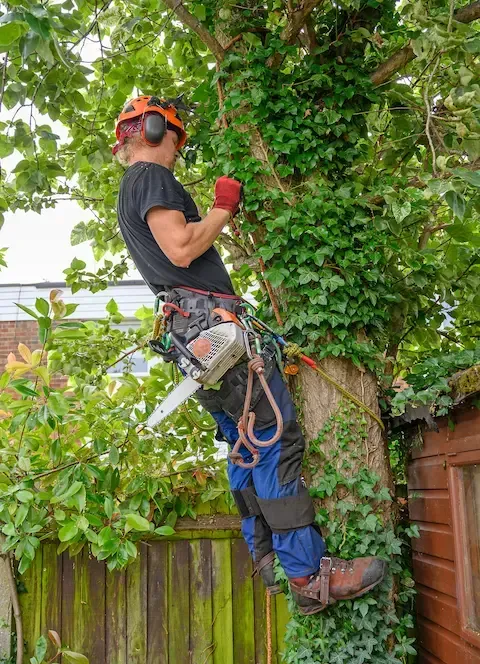
Professional Arborist Services in Jonesboro go beyond just trimming — a certified arborist can assess tree health, identify disease and pest pressure, evaluate structural integrity, and recommend a care plan that keeps your trees viable for the long term rather than just addressing what's visible today.
Preparing Your Trees for Fall and Winter
Late summer care isn't just about surviving the heat — it's about building the foundation for a healthy dormancy. Trees that go into fall well-watered, free of active pest pressure, and structurally sound are the ones that flush out strongest the following spring. In Jonesboro, where clay soils, heat, and storm exposure are ongoing realities, proactive late summer attention makes a measurable difference in the long-term health and lifespan of your trees.
Take a walk around your yard this week. Look at your canopy, examine your bark, check your mulch depth, and make note of anything that looks off. The investment you make in your trees now — in time, water, and professional assessment where needed — pays dividends every season that follows.
