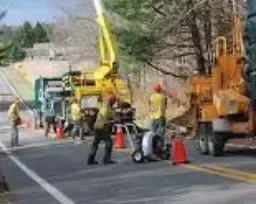
Commercial Tree Service in Jonesboro: Summer Checkup
Summer in Jonesboro hits hard. Between the humidity, the heat that routinely climbs past 95 degrees, and the pop-up storms that roll through Craighead County without much warning, commercial properties face a narrow window where tree problems can go from manageable to serious in a matter of weeks. Property managers, business owners, and HOA boards often assume trees are fine because they look green. But green foliage in July does not rule out structural failure, pest pressure, or root stress that could create a liability situation before fall arrives.
Why Summer Is a Critical Window for Commercial Trees
Spring growth can mask a lot of underlying problems. By the time July and August arrive, the stress accumulation of the growing season becomes visible if you know what to look for. Drought stress hits hardest in mid-summer, especially on paved commercial sites where reflected heat from parking lots and concrete raises ground temperature significantly. Trees in these environments use water reserves faster than roots can replace them, causing wilting, early leaf drop, and crown dieback that weakens branches.
Storm season compounds the problem. Arkansas sees significant wind events throughout summer, and trees already compromised by heat stress, disease, or root damage are far more likely to fail under load. A branch that holds through spring can come down on a vehicle, a pedestrian walkway, or a neighboring structure after a July storm, and that becomes both a safety incident and a liability claim. Catching structural issues before storm season peaks is one of the primary reasons summer checkups matter for commercial properties.
What a Summer Tree Checkup Actually Covers
A commercial summer tree checkup is not a casual walk-around. It is a systematic inspection that moves from the ground up and looks at multiple risk factors simultaneously. On a Jonesboro commercial site, this typically means evaluating every tree that is within fall distance of a structure, walkway, road, utility line, or any area with regular foot or vehicle traffic.
The inspection covers canopy structure first. Arborists look for dead wood, hanging branches, crossing limbs, and crown asymmetry that suggests uneven stress. Dead wood in the canopy is particularly dangerous because it can fall without any wind trigger at all, especially in summer heat. Beyond the canopy, the inspection moves to the trunk, checking for cracks, cavities, fungal growth, soft spots, and any signs of insect damage. Emerald ash borer activity, which has been documented in northeast Arkansas, is one issue that summer inspections are well-positioned to detect while intervention is still viable.
Root zone assessment completes the picture. Compacted soil, surface root damage from mowing, and signs of root rot at the base of the trunk can indicate that a tree is more unstable than it appears above ground. On commercial properties with frequent landscape maintenance, surface roots often take ongoing damage that accumulates over years and eventually compromises tree stability.
Specific Risks on Jonesboro Commercial Properties
Jonesboro's commercial landscape presents some recurring patterns worth understanding. Properties along East Highland Drive, the Caraway Road corridor, and areas near Arkansas State University tend to have mature tree canopies that were established decades ago. These trees provide valuable shade and curb appeal, but their age puts them in a risk category that younger trees do not occupy. Mature trees fail differently, often with little warning, and the consequences of failure on a busy commercial corridor are significant.
Retail centers and medical campuses around the Jonesboro metro area also deal with a specific challenge: tree placement near parking fields. Trees surrounded by asphalt have restricted root zones and absorb significant radiant heat, which accelerates decline. Summer is when that decline becomes visually apparent and when action can still prevent a loss.
Understanding how tree liability affects Jonesboro properties is essential context for any property manager deciding whether a summer inspection is worth the cost. The short answer is that the cost of an inspection is a fraction of the cost of a claim, and documented inspections also provide evidence of due diligence that matters significantly in liability disputes.
Pruning, Removal, and Timing Decisions
When an inspection identifies problems, summer is not always the ideal time for every type of work, but it is appropriate for several categories. Dead wood removal should happen as soon as it is identified, regardless of season. Emergency pruning for structurally compromised branches falls into the same category. Waiting on dead or hazardous material because the timing feels inconvenient is a mistake that commercial property managers cannot afford.
Elective pruning for shape or clearance can often wait until late fall when trees are dormant and cuts heal more efficiently. A qualified arborist will help you separate what needs to happen now from what can be scheduled for cooler months, allowing you to prioritize budget and scheduling without leaving urgent risk unaddressed.
Tree removal decisions in summer require careful consideration of site conditions. Working around commercial operations, customer access, and parking constraints requires planning that a residential removal does not. Coordinating access, drop zones, and debris removal on an active commercial site is a project management exercise as much as a tree care exercise, and it is one reason experience with commercial accounts matters when you are selecting a crew.
Documentation and Ongoing Maintenance Programs
Single inspections are valuable, but the most effective approach for commercial property managers is an ongoing tree care program with documented records. Each inspection should produce a written report that notes tree condition, any work performed, and any deferred items with recommended timelines. This record serves multiple purposes: it guides future maintenance decisions, supports insurance conversations, and creates the paper trail that demonstrates responsible property management.
Many commercial properties in the Jonesboro area benefit from quarterly or semi-annual visits rather than a single annual inspection. Seasonal changes create different risk profiles, and catching issues at the right point in the calendar makes interventions more effective and often less expensive. A summer visit followed by a late-fall dormancy-period visit covers the two highest-risk windows in northeast Arkansas's climate cycle.
For properties with significant tree assets, working with a consistent commercial tree service provider builds institutional knowledge about your site. A crew that has inspected your property for two or three seasons knows which trees have been trending toward decline, which pruning work has already been completed, and where your highest-risk zones are concentrated. That continuity is worth maintaining.
If your Jonesboro commercial property has not had a professional tree evaluation this season, summer is the right time to schedule one. Commercial Tree Service from an experienced local provider gives you a clear picture of what you are working with before the next storm system moves through Craighead County and before heat stress pushes a marginal tree past the point of recovery.
